
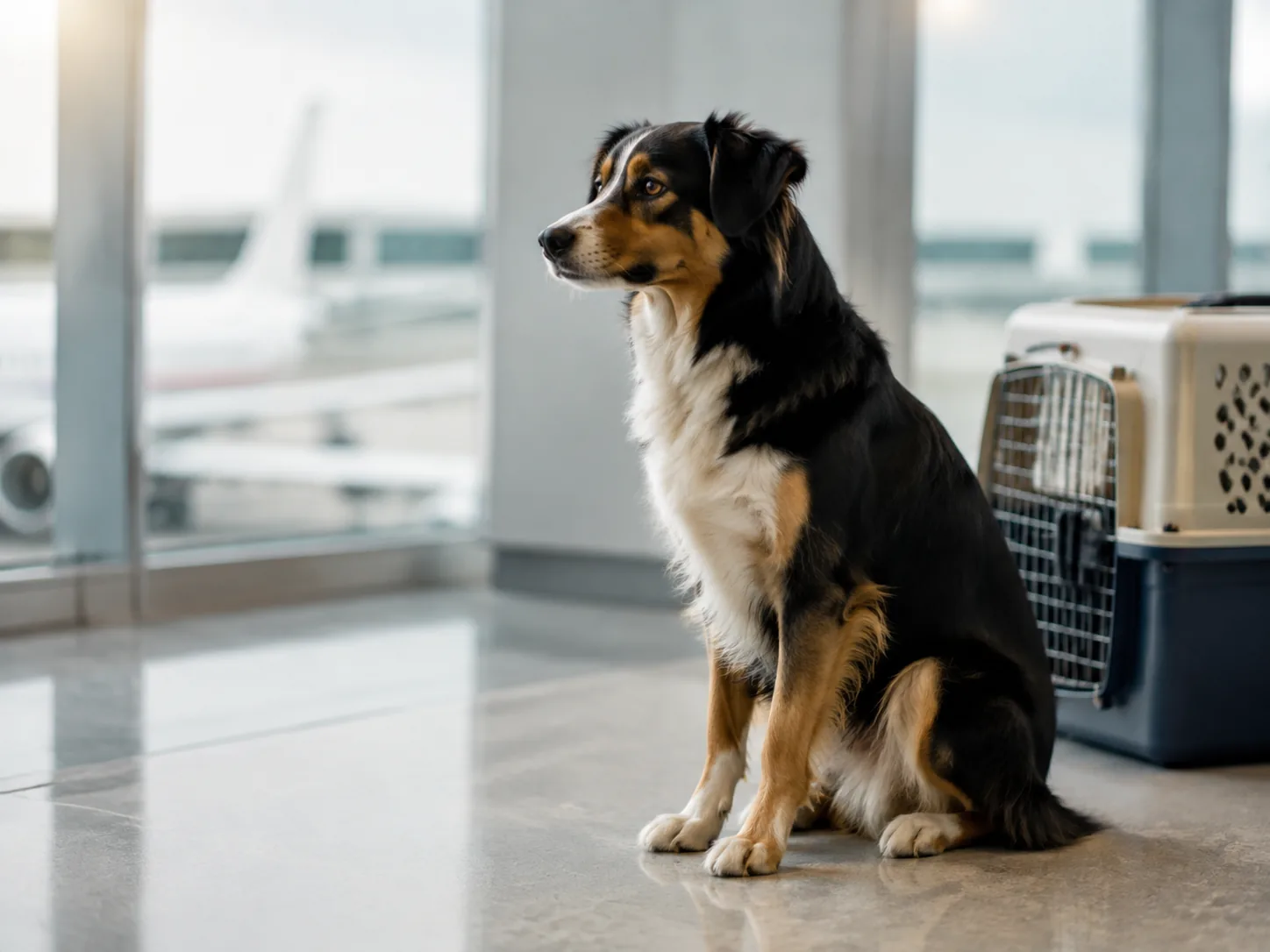
Choosing the right kennel is one of the most important parts of preparing a dog or cat to travel by air.
For pets travelling in the aircraft hold, airlines normally require a rigid kennel suitable for live-animal air transport. It must be strong enough for the journey and correctly sized for the individual animal.
A kennel that is too small, poorly ventilated or incorrectly assembled can result in the pet being refused at check-in, even if the flight and pet reservation have already been confirmed.
What is an IATA kennel?
The expression “IATA kennel” is commonly used to describe a rigid transport container designed according to standards normally applied by airlines when transporting live animals.
However, there is no single kennel that is automatically accepted by every airline. The operating airline has the final say on whether a particular kennel is suitable for a specific pet and journey.
Choosing a kennel therefore involves two separate questions:
- Is the kennel suitable for the size and characteristics of the animal?
- Does it comply with the requirements of the airline operating the flight?
Why kennel size matters
A pet must have enough space to remain in a natural position during transport. The animal should normally be able to:
- stand without its head or ears being compressed against the roof;
- sit naturally;
- turn around inside the kennel;
- lie down comfortably.
Kennel selection should not be based only on weight. Two dogs weighing the same may require very different kennel sizes because of differences in height, body length and proportions.
How to measure your dog for an airline kennel
Take the measurements while the dog is standing naturally on a level surface. Keep the tape straight and do not force the dog into an unnatural posture.
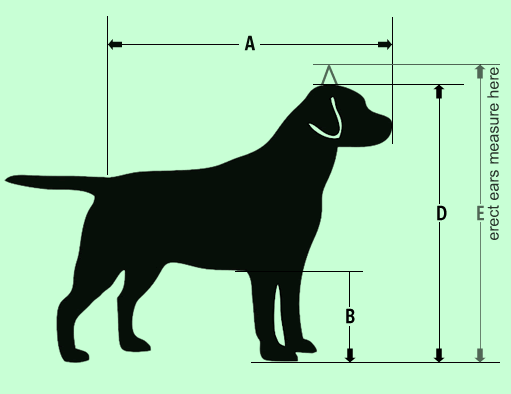
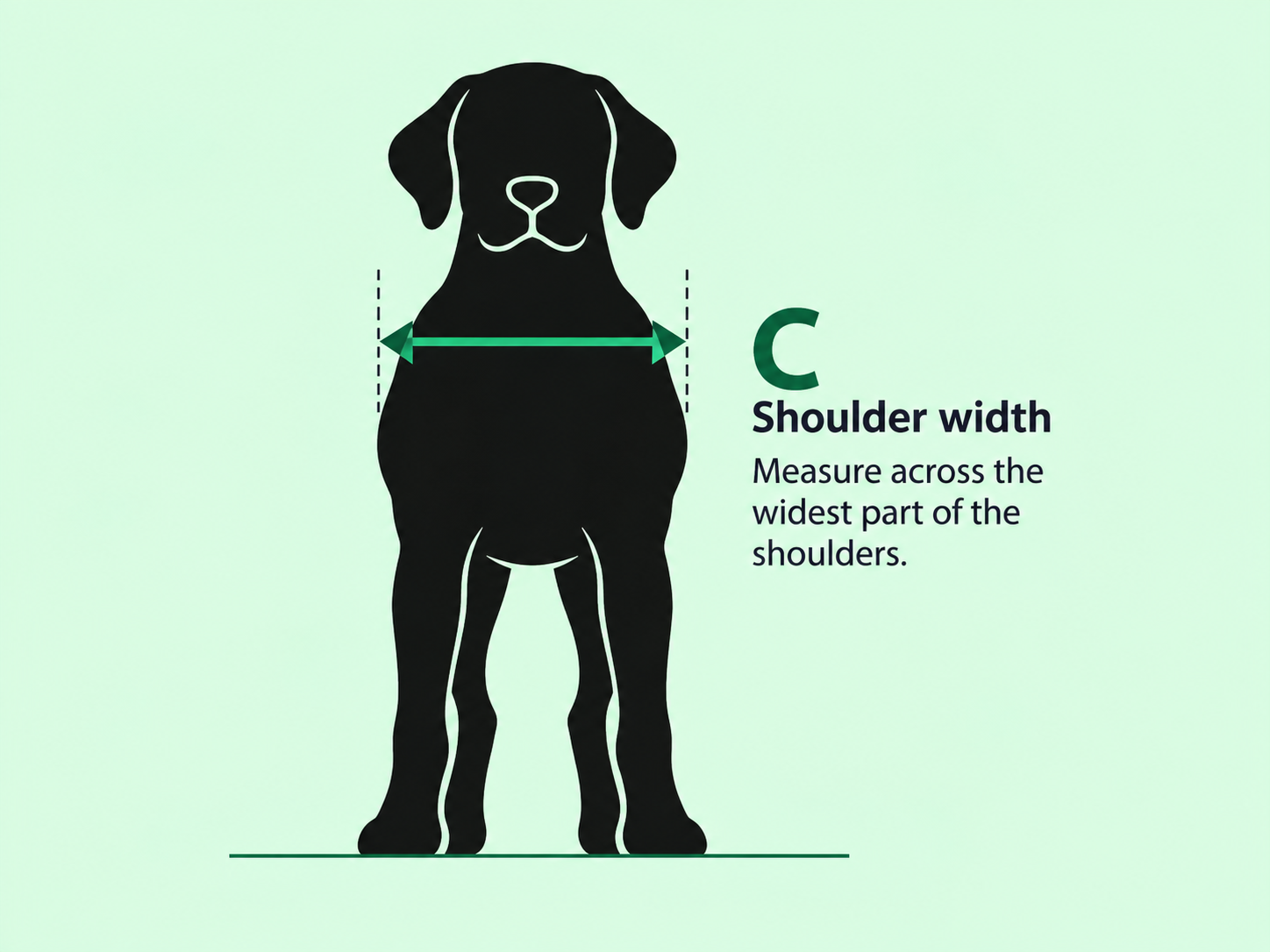
Measure from the front of the nose to the base of the tail. The tail itself is normally excluded.
Measure from the floor to the elbow joint. This helps determine the additional space needed in front.
Measure across the widest part of the dog's shoulders.
Measure from the floor to the highest natural point: the top of the head or the ear tips.
For breeds with naturally erect ears, the tips must have sufficient clearance and should not touch or bend against the roof.
Measuring a cat for an airline kennel
The same general principle applies to cats: the kennel must allow the animal to stand, turn and lie down naturally. Cats travelling in the hold normally require a rigid transport kennel suitable for air travel.
Because airline policies vary, check the proposed kennel and the cat's measurements before booking whenever possible.
Should I choose the kennel according to weight?
Weight is useful, but it is not enough. Commercial kennels are often marketed using approximate animal weights, but these should be treated only as a general guide.
The shape of the animal is more important. A tall, slim dog may require a larger kennel than a shorter, heavier dog. Base the final decision primarily on measurements and natural posture.
Construction, ventilation and the door
Rigid and robust construction
For AVIH travel, airlines normally expect a rigid, robust kennel that can withstand normal airport handling. Soft-sided PETC carriers are generally not appropriate. Cracks, damaged doors, weakened fittings or improvised repairs can cause acceptance problems.
Ventilation
Air must circulate around the animal. Do not obstruct ventilation openings with luggage, covers or modifications, and avoid alterations that reduce airflow or compromise the structure.
The kennel door
The door must close securely and should not be capable of opening accidentally. Airlines may specify the door material, locking mechanism, additional fasteners and how the upper and lower halves are assembled.
Fasteners, bowls and wheels
Check every fastener joining the kennel sections and confirm any airline-specific assembly requirements. Food and water containers should be securely attached so they cannot move freely inside.
Large kennels may have removable wheels. Airlines may require them to be removed or immobilised so the kennel remains stable during handling.
Can two pets travel in the same kennel?
This depends on the animals, their age and the airline's rules. Never assume that two pets can share simply because there appears to be enough physical space. For many journeys, each adult animal will need its own kennel.
Common kennel mistakes
Buying according to weight only
A product's weight recommendation does not guarantee sufficient space for a particular animal.
Not measuring the ears
This is especially relevant for dogs with naturally erect ears.
Choosing a kennel that is just big enough
The animal needs adequate clearance and room to change position naturally.
Using a soft carrier for AVIH
Soft carriers are primarily associated with cabin transport and are generally unsuitable for the hold.
Assuming every “IATA-approved” kennel is accepted
Final acceptance always belongs to the operating airline.
Leaving the kennel until the last minute
If it proves unsuitable shortly before departure, finding the correct replacement may be difficult.
When should I buy and prepare the kennel?
Ideally, well before the journey. This gives you time to confirm the size and airline requirements, replace the kennel if necessary and allow the pet to become familiar with it.
Leave the kennel open at home and allow the animal to enter voluntarily. Familiar bedding may help where appropriate. The kennel should become a familiar space, not something that first appears on departure day.
Is an airline kennel needed for PETC?
Usually not the same type. Pets travelling as PETC — Pet in Cabin normally use a smaller carrier designed to fit beneath the passenger seat. Pets travelling as AVIH normally require a rigid kennel.
If you are unsure which transport method applies, read our PETC vs AVIH guide.
Can the kennel determine whether a journey is possible?
Yes. For larger dogs in particular, kennel dimensions can influence which airlines or aircraft can be used. A dog may be accepted in principle as AVIH but require a kennel that cannot be accommodated on a particular aircraft or route.
UniPetrans therefore considers the animal, kennel, airline and itinerary together when assessing an accompanied pet journey.
Before travelling
Before purchasing or using a kennel for a specific flight, check:
- the animal's A, B, C and D measurements;
- the internal space available;
- the kennel's condition and ventilation;
- door security, assembly and fasteners;
- the operating airline's requirements;
- whether the kennel can be accepted on the aircraft used.
Previous acceptance by another airline does not guarantee acceptance on a new journey.