
Special-care travel planning
Air Travel for Anxious Dogs and Cats
Reduce avoidable stress before the airport becomes part of the journey.
UniPetrans assesses nervous or travel-sensitive pets individually, combining route choices, carrier preparation, veterinary coordination and accompanied travel options where feasible.
Discuss Your Pet's Journey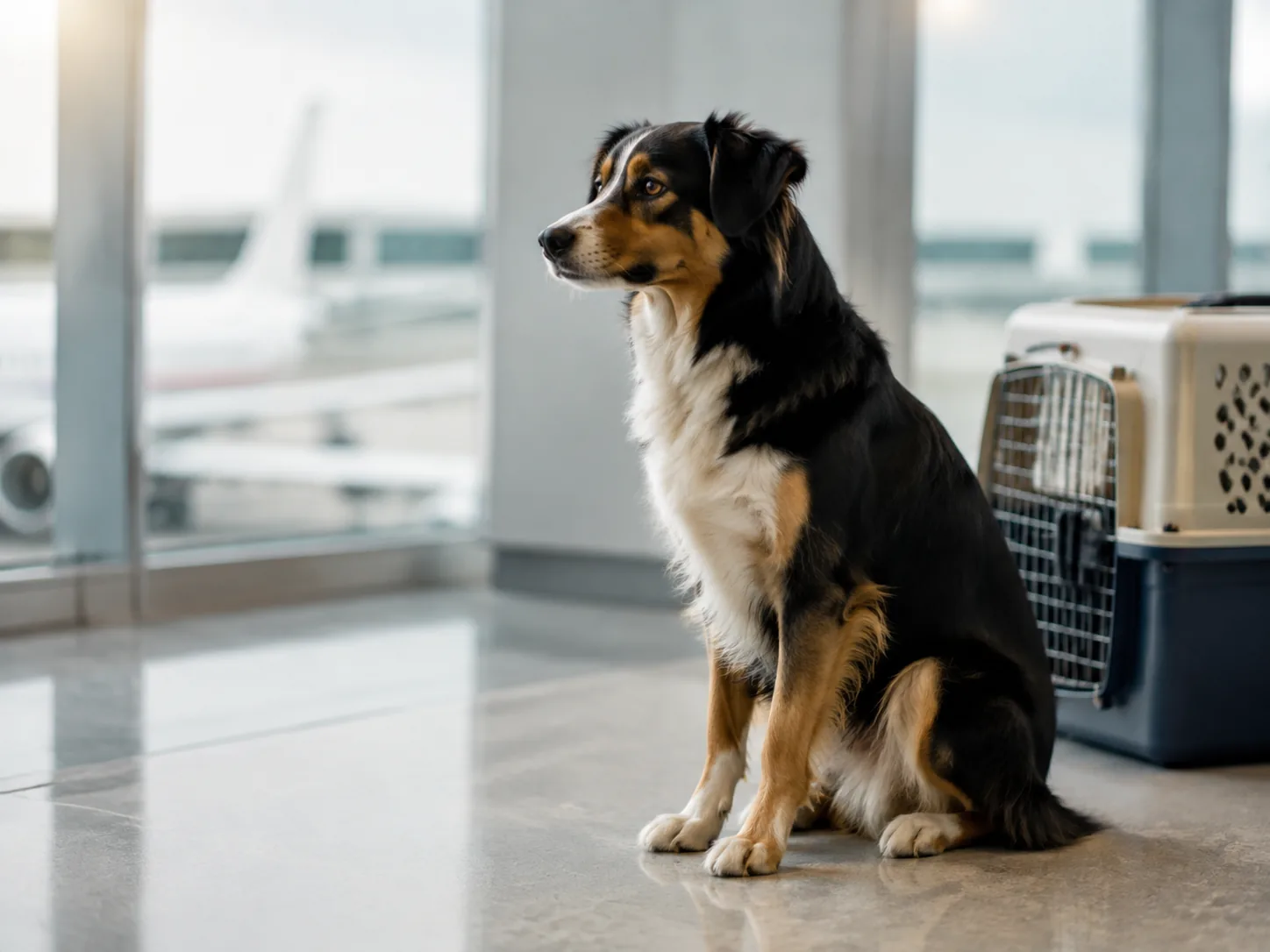
Individual AssessmentBehaviour, health, route and handling are considered together.
Preparation FirstCarrier familiarisation begins before travel day.
Personally ManagedA clear handover and journey plan for each accepted case.
01
Anxiety changes the planning question
The question is not simply whether an airline accepts pets. We consider how the animal responds to confinement, unfamiliar people, noise, separation and previous travel, alongside health, age, breed and route.
Some pets may benefit from a different itinerary or more preparation. For others, postponing travel can be the responsible recommendation.
02
Build carrier confidence gradually
A compliant carrier is also the animal's immediate travel environment. Positive familiarisation should start early, moving from voluntary access to short, calm periods with the door closed and controlled practice journeys.
The plan should never depend on forcing an unprepared animal into a carrier at the airport.
03
Choose the complete route, not only the shortest flight
Direct travel can reduce transitions, but departure time, heat, aircraft restrictions, airport handling and destination arrangements also matter. UniPetrans compares the whole journey rather than treating flight duration as the only welfare factor.
04
Medication belongs to the veterinary plan
Sedation is not a standard shortcut for anxious air travellers. IATA passenger guidance warns that tranquillisation can reduce an animal's ability to respond to transport stress.
Only the treating veterinarian can advise on medication for the individual animal, and any plan must also comply with the airline's rules. UniPetrans does not prescribe or replace veterinary advice.
05
Accompaniment can improve continuity
Where feasible, a professional can manage check-in, transfers, updates and handover on the same itinerary. This does not mean the pet can leave its carrier during flight, and accompaniment cannot make an unsuitable journey suitable.
Official guidance: IATA Traveler's Pet Corner · IATA cabin travel guidance.
06
What the initial assessment covers
We review triggers, carrier experience, health and veterinary guidance, proposed itinerary, airline options, airport stages, destination handover and the time available for preparation.
Discuss Your Pet's JourneyFrequently asked questions
Anxious Pet Air Travel
Can an anxious dog or cat travel by air?
Sometimes, but suitability must be assessed individually. Health, behaviour, carrier tolerance, route length, temperature, airport handling and airline acceptance all matter.
Should an anxious pet be sedated for a flight?
Sedation is not a routine solution for air travel and can add risk. Medication decisions belong to the treating veterinarian and must also be compatible with the airline’s conditions.
How can carrier stress be reduced before travel?
Gradual positive carrier familiarisation should begin well before the journey. The carrier must still meet the airline and applicable live-animal requirements.
Does a direct flight always make the journey better?
Fewer stages can help, but the best itinerary also depends on aircraft, acceptance, timing, temperatures and the animal’s needs. The whole route should be compared.
Can a UniPetrans professional stay with the pet?
Where cabin or accompanied arrangements are permitted, a professional can manage the travel stages. The animal may still need to remain secured in its compliant carrier during the flight.
What information is needed for an initial assessment?
We need the route, dates, species, breed, size, health history, previous travel experience, known triggers, carrier experience and any veterinary advice already received.
Related UniPetrans services
Choose the right planning route
Initial assessment
Is your pet nervous about travel?
Tell us the route, animal, previous travel experience, known triggers, carrier preparation and any veterinary advice. We will assess whether and how the journey can be planned responsibly.
Email: info@unipetrans.com
Prefer messaging? Ask us on WhatsApp